CANINE DEVELOPMENT & LEARNING • TRAINING INSIGHTS
How the transition from puppyhood to adulthood can influence learning and responsiveness to familiar cues.
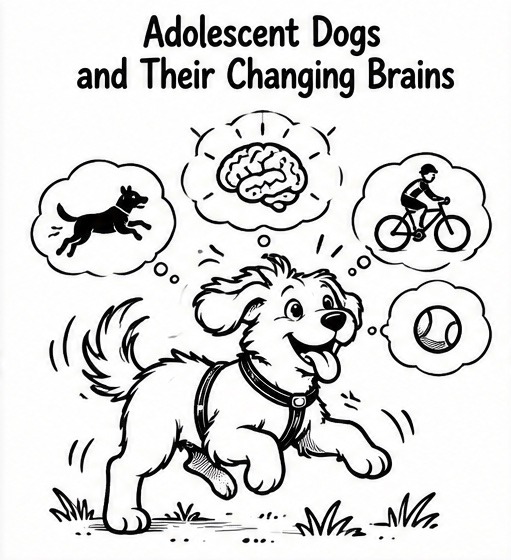
Adolescence is a significant developmental stage in a dog’s life, involving much more than physical growth and sexual maturity.
As dogs transition from puppyhood towards adulthood, hormonal changes occur alongside ongoing neurological and behavioural development. These changes can influence emotional responses, motivation, impulse control and social behaviour.
Importantly, the brain systems involved in behavioural regulation and decision-making are still developing. Research comparing puppies with young adult dogs has identified improvements in cognitive abilities, including inhibitory control and behavioural flexibility, as dogs mature.
You may notice more independence, greater interest in distractions and less reliable responses to familiar cues.
A 2020 study published in Biology Letters identified a temporary reduction in responsiveness to familiar commands during adolescence, particularly when instructions were given by the dog’s primary caregiver.
This does not mean previous training has been forgotten.
Adolescence can affect when a dog is able or motivated to use skills they already know.
Keep training through adolescence, with realistic expectations. Adjust the difficulty to your dog’s emotional state, development and experience.
At Mizz Pawz Dog Training & Behaviour, adolescent training focuses on supporting this transition while strengthening communication, understanding and the relationship between dogs and their owners.
Further reading: Asher et al. (2020), Biology Letters; Bray et al. (2021), Animal Cognition.
Support through adolescence
Our individualised, reward-based Adolescent Life Skills course helps owners continue building everyday skills and understanding as their dogs mature.

